Faculty of Science and Engineering
Department of Mechanical Engineering

ABOUT
Department of Mechanical Engineering
To think. To imagine.
Human skills that machines lack,
To advance machines.
We live surrounded by various "things," such as cars and home appliances.
Mechanical engineering is the knowledge and skills necessary to create things, and engineers who have studied it support Japan's industrial sector.
In the Department of Mechanical Engineering, you can learn about various machine tools used to process mechanical parts, as well as FA (Factory Automation) systems adapted to the information society.
We cultivate engineers who can contribute to the local community through well-equipped facilities and a supportive environment, including (factory automation) training equipment.
In their year-long graduation research project, students work with faculty members to hone their critical thinking, judgment, creativity, and communication skills.
I will strive to improve my skills as an engineer.

ADMISSION
POLICY
- 01
Those who have a strong interest in mechanical engineering, including machinery, automobiles, industrial/care robots, and mechatronics.
- 02
They have a strong desire to acquire specialized knowledge in mechanical engineering.
People who are proactive in acquiring new skills - 03
By applying the results of their studies to practical work related to mechanical engineering,
People who want to contribute to the local community
Characteristics of the Department
To meet the needs of the times
Research that responds
By engaging in research that responds to diverse needs that change with the times, such as global warming, energy issues, agriculture, and nursing care, we aim to develop engineers with practical skills and the ability to collaborate.
Educational system that emphasizes practical learning
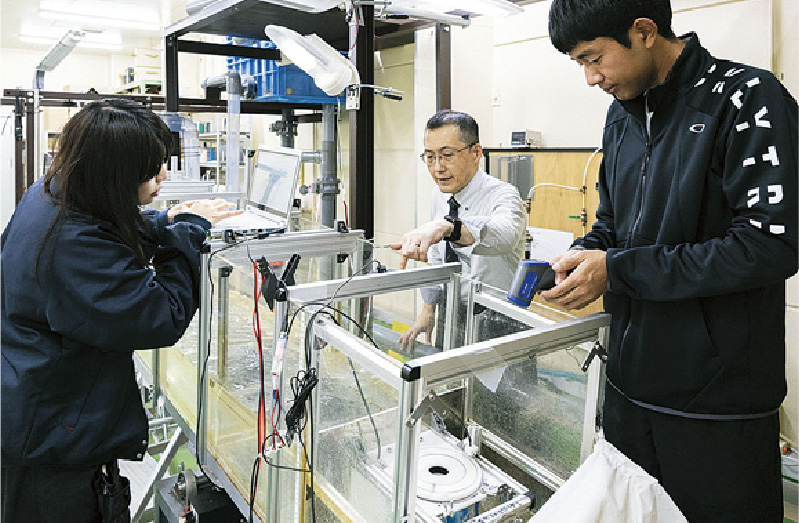
In order to foster the design and development skills required of mechanical engineering-based engineers, we develop human resources through practical learning such as processing, experiments, analysis, model-based development, and the use of AI.
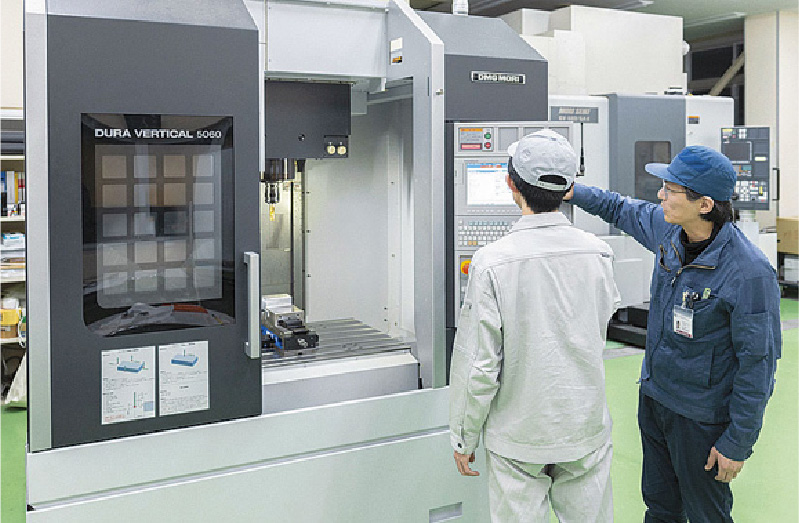
Industry-academia-regional collaboration
Problem solving
In order to solve the problems faced by local companies, students make full use of not only what they learn in lectures but also the knowledge they gain through research activities to design, manufacture, and evaluate products.
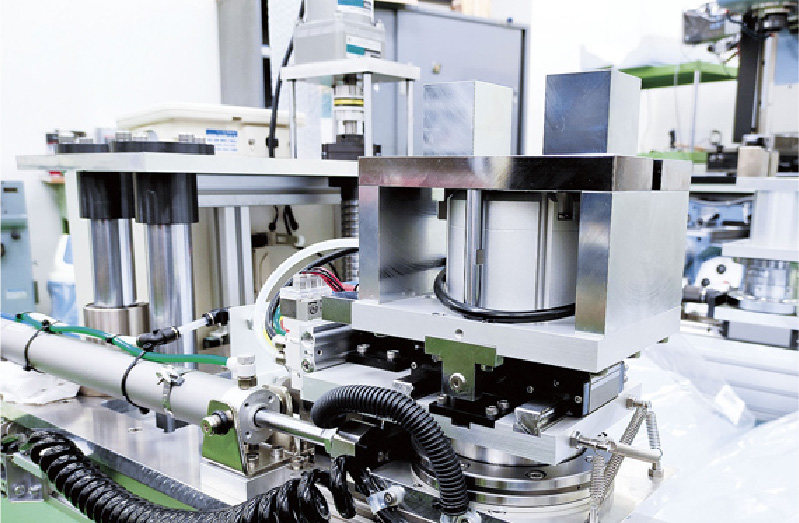
Advanced Program
A support program that responds to motivation
Aiming to design and develop
Mechanical Engineer Training Program
For motivated first and second year students who aim to work in design and development at a company, faculty and staff form teams to teach them the knowledge and skills related to manufacturing in small classes. In addition, by learning about research and employment and interacting with seniors, students' motivation to study specialized subjects is improved.
Four-year learning process
First-year studentsimprove their fundamental academic skills.
Students will study mechanical engineering knowledge and skills, electrical circuits used in robotics and mechatronics, programming and computer fundamentals, mathematics, physics, and foreign languages.
Enhance specialized knowledgein the second year.
Students will acquire knowledge about strength, motion, heat, flow, electrical circuits, and other subjects necessary for machine, automobile, and robot design, and will learn the processing techniques used to create machines and robots through both classroom and practical training.
3rd yearWhen selecting a course
Develop specialized skills
Develop specialized skills
Students are divided into two courses: "Machinery and Robotics" and "Production Technology," where they learn specialized knowledge and skills through a variety of experiments and practical training.
4th yearIn the future (employment/further education)
Activities toward
Activities toward
I will be working on my graduation research. Through a year of research activities, I will cultivate my analytical skills, judgment skills, creativity, communication skills, and other abilities that will enable me to contribute to society.
Choose your course of study from your third year.
Machinery and Robotics Course
Aiming to become an engineer with high problem-solving abilities
In this course, students learn software technologies such as programming and algorithms, hardware technologies such as computers and embedded systems, and network technologies. From the second year, students are divided into the "General Education Program" and the "Applied Education Program" to learn information technology practically.
Production Technology Course
Aiming to become a practical engineer in all aspects of machinery
In this course, students will learn traditional mathematics such as calculus, linear algebra, and probability and statistics to gain a solid mathematical foundation, and will also study information mathematics, a field of mathematics that has developed alongside computers, such as discrete mathematics, to gain a theoretical understanding of information science.
Class Pickup
Combining information, machinery and electricity
Mastering Information and Mechatronics Technology
Project Design Management
Professor Kazuhiro Tsuruta
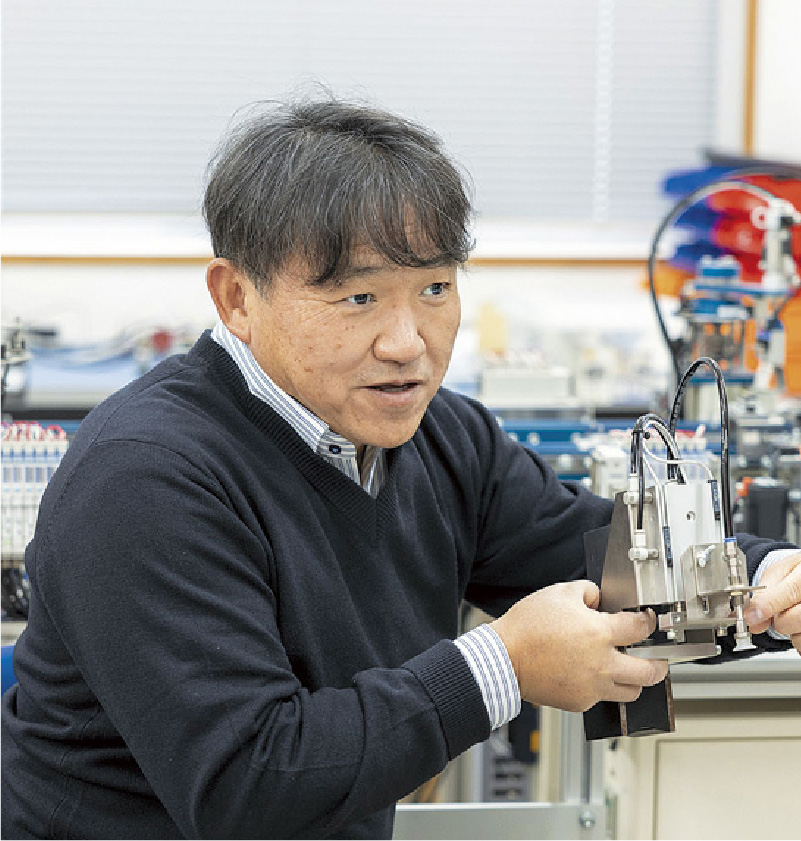
In this class, students learn how to automate machines used in factories. Specifically, students will assemble machines using pneumatic machines, electric motors, and devices that change the rotary motion of machines into linear motion. To control the movement of these machines, students will use light-sensing sensors and other types of sensors, and create programs using a special programming device (PLC). In this way, students can learn about technology that uses information technology, machinery, and electricity together by operating machines that they have designed.
3D CAD, NC machine tools, etc. from the first year
Experience manufacturing using people
Engineering Skills II
Professor Daisuke Matsushita
For motivated students aiming to work in design and development, students will start manufacturing using 3D CAD and NC machine tools from their first year. Small classes provide more opportunities for students to exchange information with teachers and seniors, and students can understand the significance of the specialized subjects they will study in the future. In addition, by experiencing various processing machines and processing methods, and experiencing the differences in properties of materials and errors in processing, students aim to develop more flexible thinking and practical problem-solving skills.
Seminar Pickup
Taisuke Sakaki Seminar
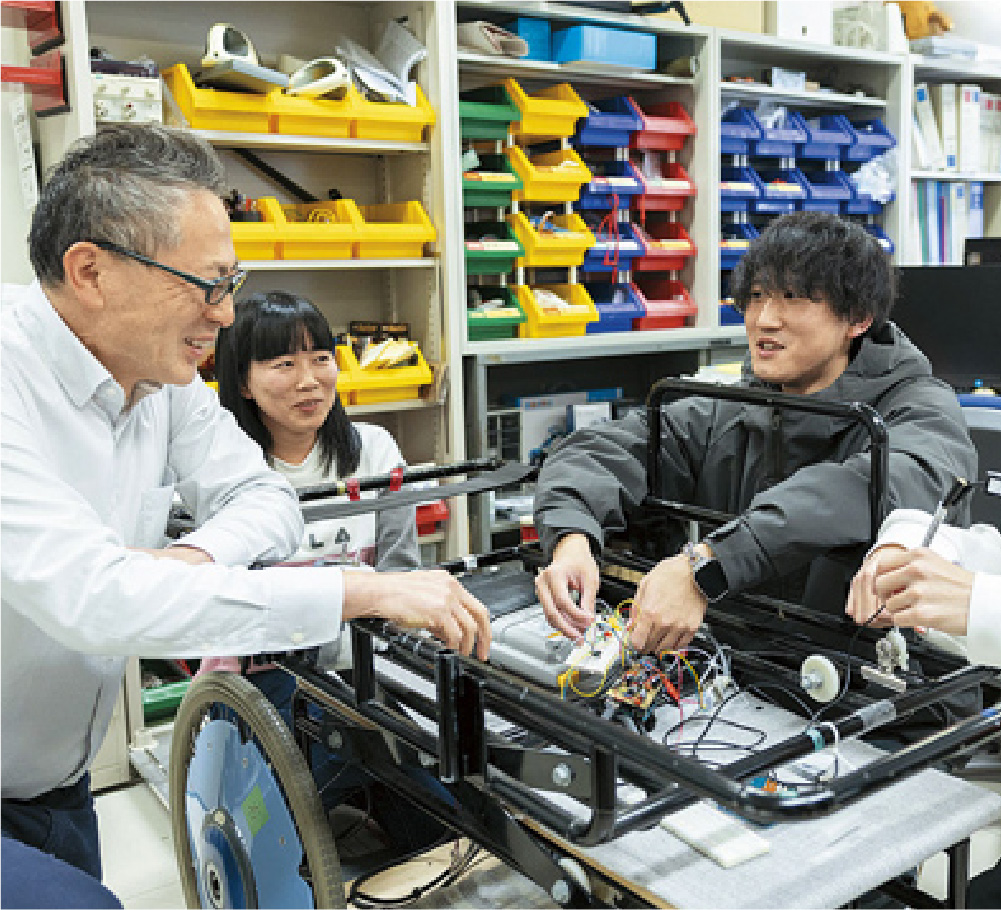
Researching technologies to help people
Technology to help people is one of the future pillars of mechanical engineering. With a labor shortage due to a declining birthrate and aging population, support technology for the elderly and disabled is essential. In addition to the assist suit shown in the photo that prevents back pain in a nursing facility and a robot that supports the movement of people with total paralysis, we are researching walking rehabilitation robots for stroke patients, avatars that predict falls in the elderly, avatars that watch over people with heatstroke, and nursing lifts.
Seminar student voices
Ryo Takeshima
Kokuraminami High School/Fukuoka
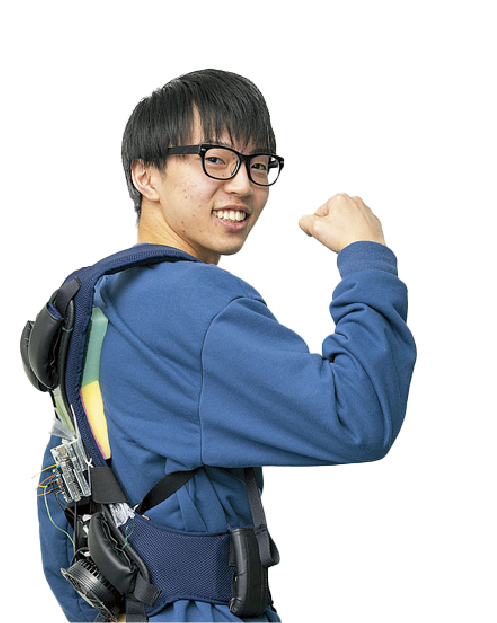
Although the research was difficult as we often reached dead ends, the sense of accomplishment we felt when we were able to solve a problem on our own was priceless. I feel that this experience helped me grow as a person.
Mitsuaki Murata Seminar
Shortage of skilled workers
Complementary research
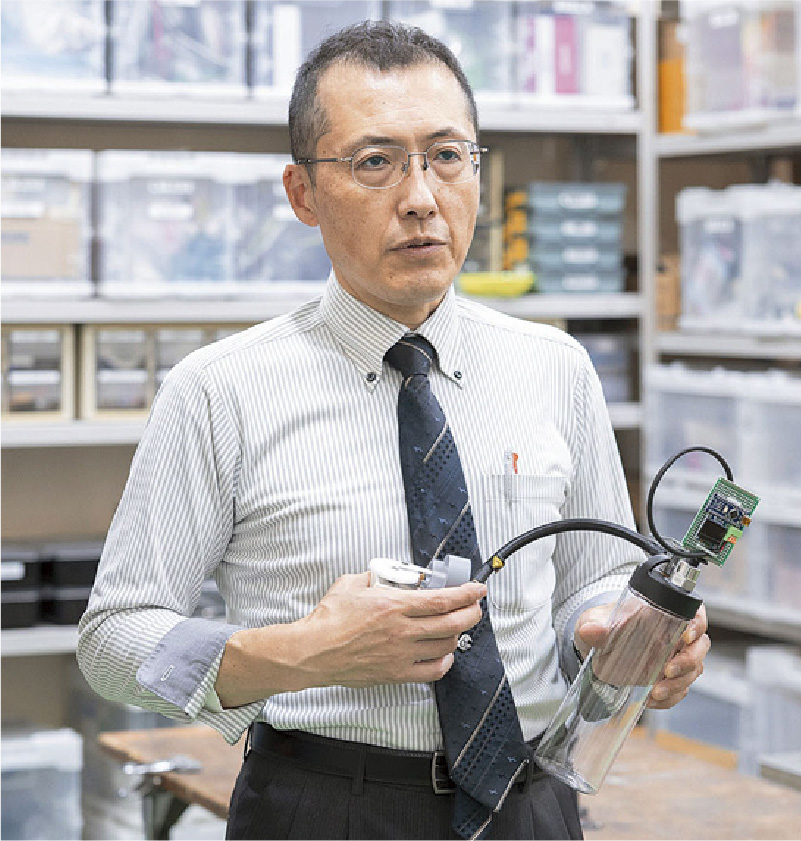
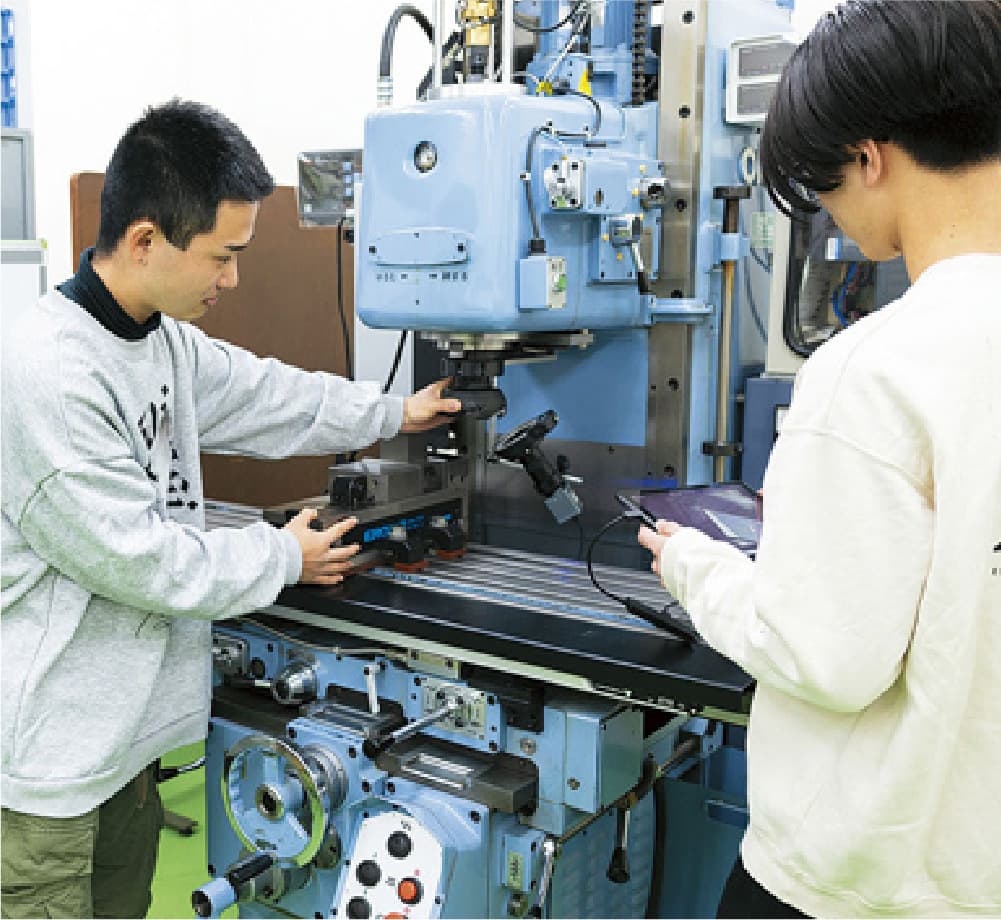
Most of the products around you are made using "molds." Molds are made by cutting hard metals little by little through cutting processes. The tools used to cut the metal used in this process, like the blades you use every day, will gradually lose their sharpness with use. We are conducting research into automatically determining the appropriate time to replace a dull tool with a new one.
Seminar student voices
Sota Mitsutome
Hakuryo High School/Fukuoka

I was able to overcome these obstacles by repeatedly discussing the issues with my fellow researchers and facing the data. I also failed many times, but I believe these experiences will become valuable assets for me in the future.
Qualifications and career path data
Qualifications to aim for
- Junior High School Teacher's License (Technology) <Application Pending> *
- High School Teacher's License (Industrial Arts)
- Professional Engineer (Exempt from First Examination) Mechanical Design Engineer
- CAD usage engineer
- Boiler and Turbine Chief Engineer (practical experience required)
- IT Passport
- Curator
- Social education specialist (training course), etc.
*For programs that are currently under application, the planned opening dates of teacher training courses may be subject to change as a result of the review by the Ministry of Education, Culture, Sports, Science and Technology.
Main Employment Destinations
- Honda Motor Co., Ltd.
- Suzuki Motor Corporation
- Yaskawa Electric Corporation
- / Fujitsu General Ltd.
- Toshiba Tec Corporation
- Mitsubishi Electric System Service Co., Ltd.
- Mitsubishi Electric Building Solutions Corporation
- Hitachi Global Life Solutions, Ltd.
- Hitachi Building Systems Co., Ltd.
- / Noritz Corporation
- Yanmar Construction Machinery Co., Ltd.
- Japan Elevator Service Holdings Co., Ltd.
- Kyushu Railway Company
- Keihan Electric Railway Co., Ltd.
- JR Kyushu Engineering Co., Ltd.
- Kyushu Electric Power Co., Inc.
- Chudenko Co., Ltd.
- Kinden Co., Ltd.
- Nishimatsu Construction Co., Ltd.
- Penta-Ocean Construction Co., Ltd.
- Japan Steel Works Ltd.
- JFE Engineering Corporation
- Fukuoka City Hall
- Japan Coast Guard
- / Tokyo Metropolitan Police Department
- / Kyushu Regional Development Bureau, Ministry of Land, Infrastructure, Transport and Tourism
Graduate Interview
Mr. Daiki Ogi
Nagasaki Kita High School / Nagasaki
- Employment
- Fukuoka City Hall (Technical position)
Besides classes, I participated in disaster recovery volunteer work and obtained a CAD technician qualification once a year. I had a fulfilling student life. I would like to continue to improve my knowledge and wisdom and contribute to the development of the city's infrastructure.
Mr. Daiki Aoki
Kyushu Sangyo University Kyushu High School/Fukuoka
- Employment
- The Japan Steel Works, Ltd.
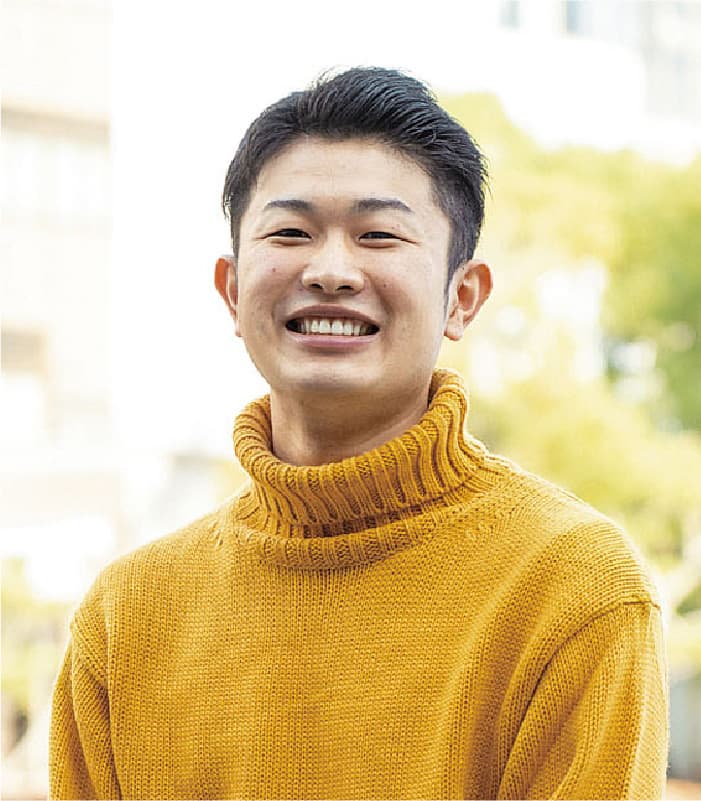
I believe that my broad understanding of mechanical engineering led to my career choice. I chose a company in the large machinery industry that manufactures products with a high global market share. I aspire to become an engineer who can create cutting-edge machinery.


If you cannot view PDF files, please download Adobe Reader.