Faculty of Science and Engineering
Department of Electrical Engineering

ABOUT
Department of Electrical Engineering
I've never seen that before.
I can't even imagine.
Electrical engineering is what creates that.
My goal is to become a researcher or engineer who will change the world in 20 years.
In order to realize the "smart city," a next-generation city that is safe, secure, and resilient to disasters, which modern society demands,
In Department of Electrical Engineering, we are working on "energy creation" using clean hydrogen fuel cells, which will be used in next-generation fuel cell vehicles.
Energy saving through home appliances that utilize highly efficient power conversion, and energy storage through wireless power supply systems that allow charging without connecting cables.
We are engaged in groundbreaking applied research, such as "communication" using next-generation 5G communication technology and next-generation visible light communication technology that transmits information through everyday lighting.
ADMISSION
POLICY
- 01
People interested in electrical energy, electronic devices, and information and communications
- 02
They have a strong desire to acquire specialized knowledge in the electrical field.
People who are proactive in acquiring technical skills and abilities. - 03
Appropriately utilize the results of your studies in practical settings in the electrical engineering field.
People who want to contribute to the local community
Characteristics of the Department
The only one in Kyushu!
You can obtain two national qualifications.
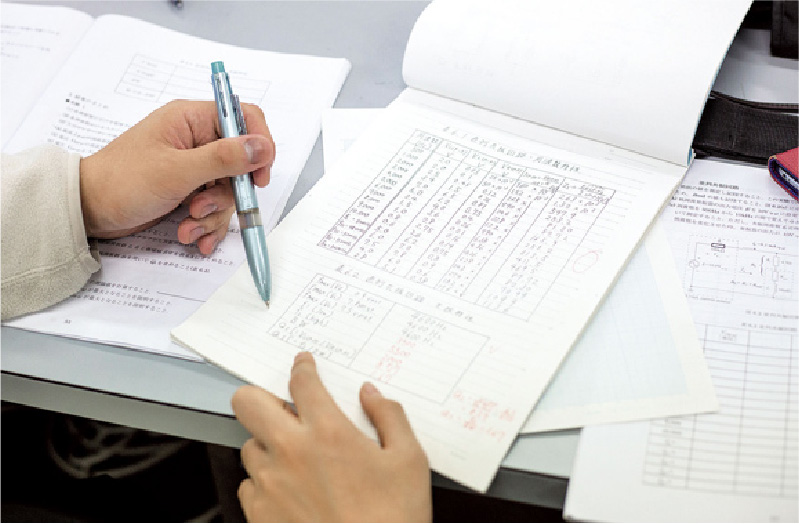
We are an accredited school for chief electrical engineers and radio operators (long-term training course), and are the only department in Kyushu where students can obtain national qualifications in both electrical and communications through the study of electricity, electronics, and communications.
In electrical, telecommunications, and semiconductor technologies
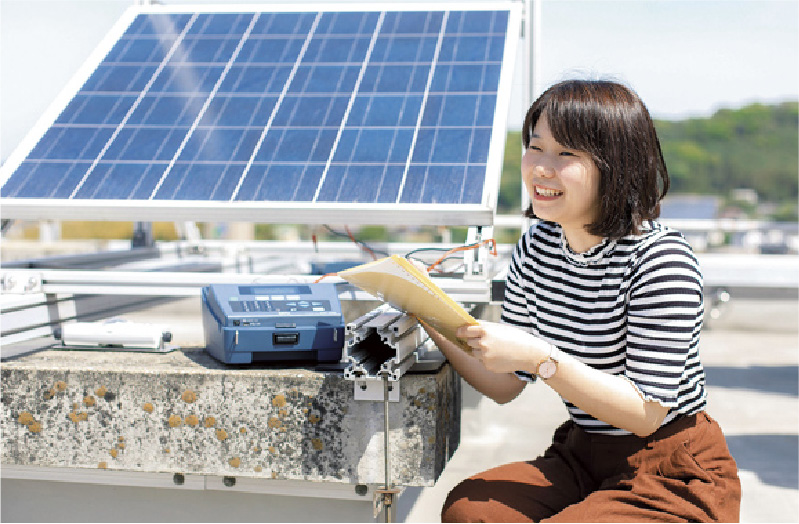
A prosperous society that is resilient to disasters
We will be working on applied research into energy creation using hydrogen fuel cells, energy conservation using highly efficient power conversion, energy storage using wireless power transfer systems, communication using 5G communication technology, and semiconductors that are indispensable to everyday life.
By teaching
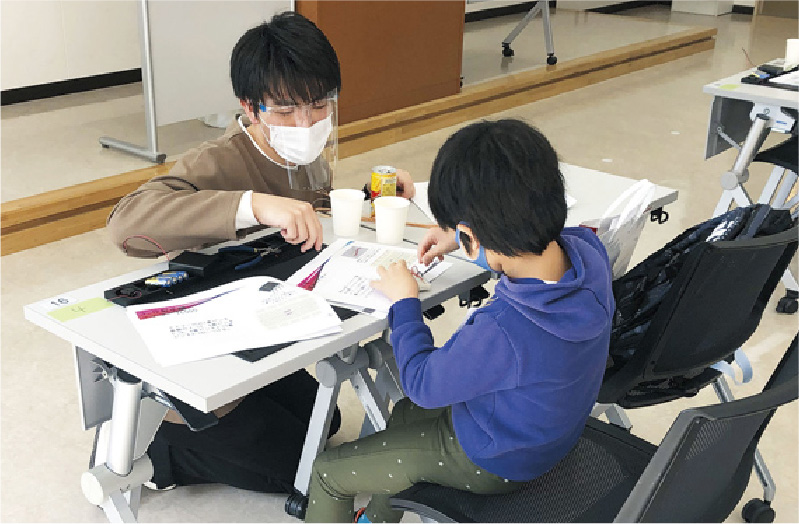
Further deepen your expertise
In order to help children become familiar with "electricity," students will act as teachers and plan and run science classes for elementary and junior high school students. By teaching, students will deepen their specialized skills and knowledge.
Advanced Program
A support program that responds to motivation
Electrician's License
Acquisition support program
Students will aim to obtain the national qualification of Electrician (Type 1 and Type 2), which is highly versatile in the electrical industry and provides an advantage in finding employment.
Four-year learning process
Building a foundation for learningin the first year
In addition to mathematics, physics, and foreign languages, students will learn electrical engineering knowledge and techniques, as well as the basics of programming and computers.
2nd yearLearn the fundamentals of your specialization
I also challenged myself to obtain qualifications.
I also challenged myself to obtain qualifications.
Students will acquire knowledge of electrical and electronic circuits, electromagnetism, etc., and will develop specialized academic ability through both lectures and experiments. They will also have practical training and exercise courses to acquire qualifications, and will strengthen their practical skills.
Third-yearspecialization selection,
Deepen understanding
Deepen understanding
Students will acquire specialized knowledge and skills in each course through a variety of experiments and exercises.
4th yearFor the future (employment/further education)
Activities toward
Activities toward
Students will work on their graduation research. Through research activities over the course of one year, they will develop creativity, practical ability, analytical skills, and communication skills, and acquire the ability to contribute to society.
Choose your course of study from your third year.
Electrical Energy Course
Acquire electrical energy technology,
Cultivating individuals who consider the global environment
Students will learn specialized knowledge about environmentally friendly energy creation, storage, and conservation, as well as the fundamentals of the generation, transmission, and conversion of electrical energy that supports them, and acquire the ability to apply this knowledge in practice.
semiconductor·
Electronic Devices Course
Acquire electronic device technology,
Developing human resources to support the semiconductor industry
Students will learn specialized knowledge about environmentally friendly energy creation, energy storage and conservation, as well as the fundamentals of the materials, electronic properties, electronic devices and semiconductor engineering that support them, and acquire the ability to apply these knowledge to practical work through experiments.
Electronics, Information and Communication Course
Acquire information and communication technology skills,
Developing individuals who can think critically and support the information society.
Students will learn the fundamentals of electrical engineering, semiconductor engineering, and information technology, as well as the mechanisms of electrical and optical communication systems, and through experiments and practical training will acquire the skills to apply this specialized knowledge to practical work aimed at realizing an information society that is considerate of the global environment and enriches people's lives.
Class Pickup
Fundamental technologies related to information and communications
Study Widely
Communication Systems Engineering
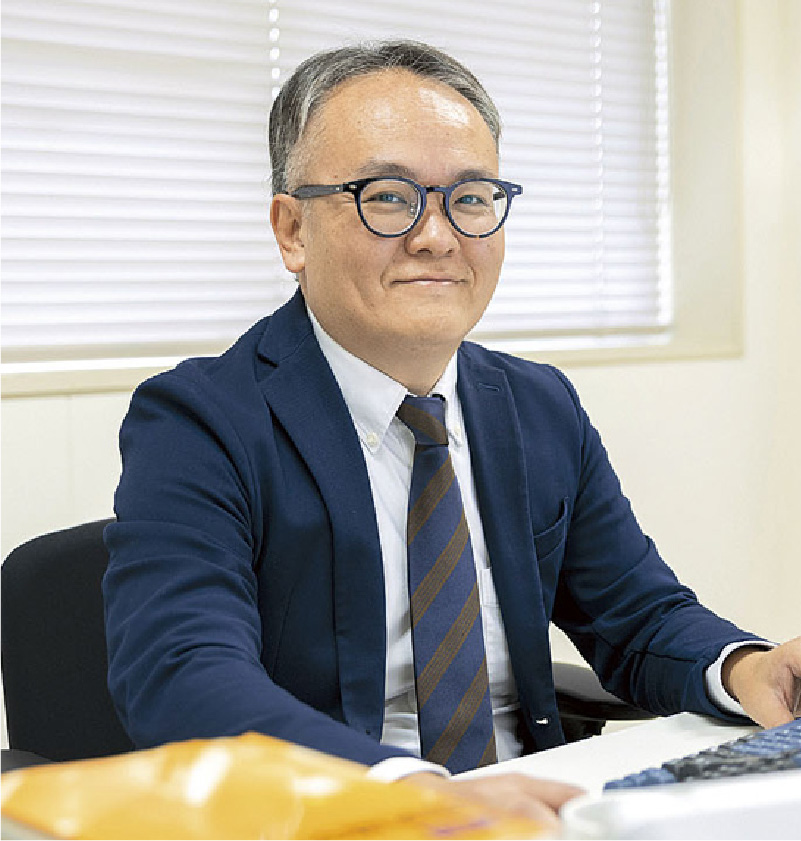
Professor Yoshiteru Abe
Thanks to advances in electrical and electronic technology and information and communication technology, a high-speed, high-capacity communication infrastructure has been established, and with the spread of high-performance smartphones, we now live in a society where everyone can enjoy a comfortable communication environment. In Communication Systems Engineering, students learn a wide range of fundamental information and communication technologies that realize the current comfortable communication environment. This subject also teaches basic knowledge about the Internet and wired/wireless communication systems, allowing students to learn the basics of current information and communication networks. It is suitable for students who wish to work in the information and communication industry in the future.
From semiconductor manufacturing technology to measurement technology
Learn the basics consistently
Electronic Device Engineering Experiment
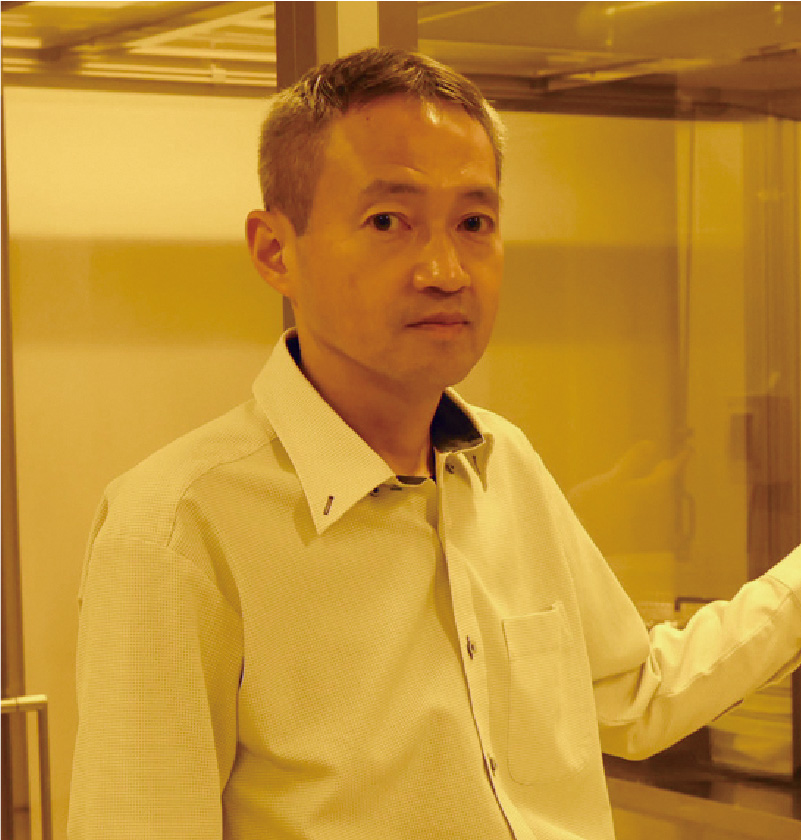
Tetsuro Sueyoshi, Associate Professor
In modern society, semiconductors and other electronic devices are incorporated into virtually every system, serving as its driving force. This course provides hands-on learning about the fundamentals of electronic circuits, including their design and basic principles, as well as the fundamentals of semiconductors, one of the electronic devices that make up these circuits. In particular, the semiconductor experiments include "making" experiments using vacuum and thin-film technology, and "measuring" experiments on the Hall effect, allowing students to learn the fundamentals of semiconductor manufacturing and measurement techniques in a comprehensive manner. This course is highly recommended for students aiming for careers in the semiconductor manufacturing industry.
Seminar Pickup
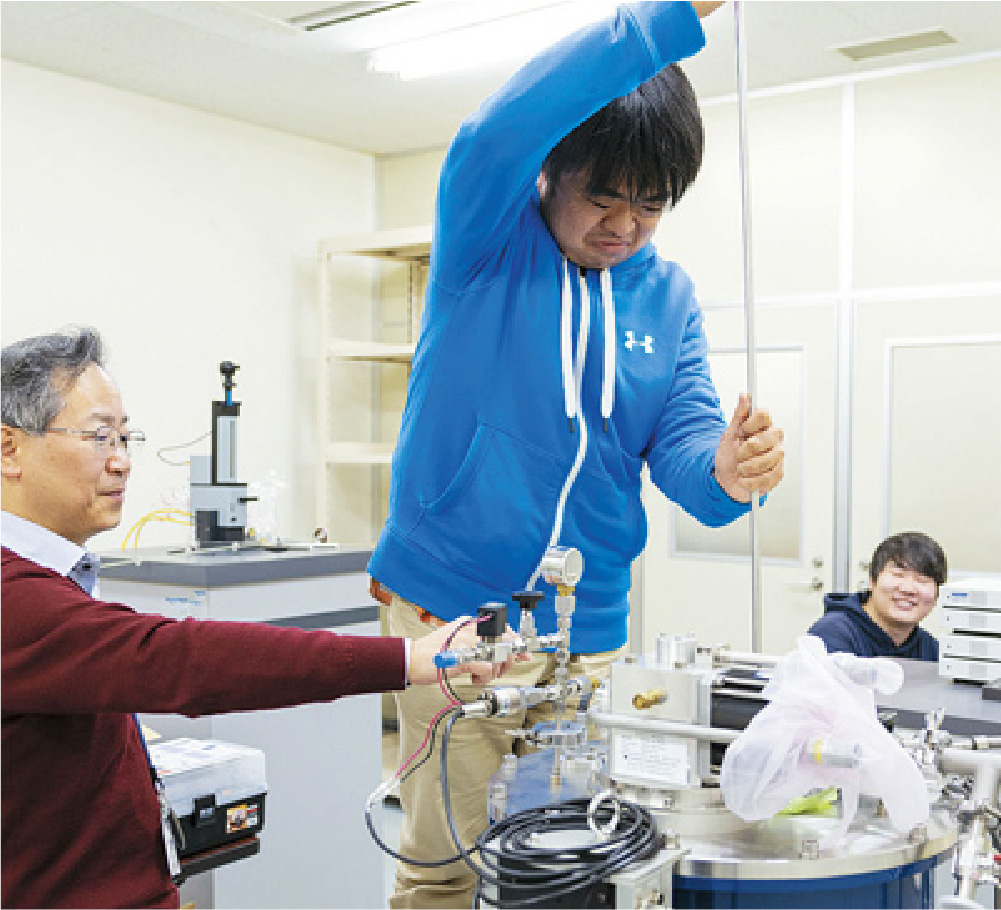
Terukazu Nishizaki Seminar
In research and development of high-performance superconducting materials
Towards a prosperous future society
Superconducting materials have special properties not found in other metals or semiconductors, including the property of zero electrical resistance. Superconductivity is a technology necessary for realizing a smart society and improving the performance of medical devices, as seen in its application in MRI imaging diagnostic devices and superconducting linear bullet trains. In our laboratory, we are researching and developing new high-performance superconducting materials that are essential to realizing a prosperous future society by controlling superconducting materials at the nano level.
Seminar student voices
Takayuki Ueda
Saga Seiwa High School/Saga
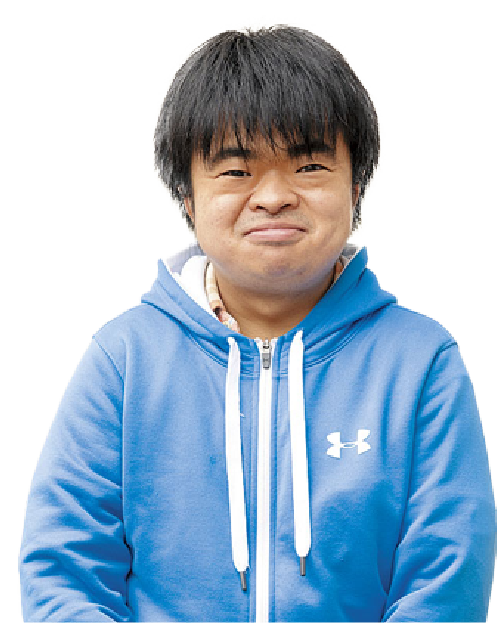
In my graduation research, I am working on an experiment on a new type of superconductor called a high-entropy alloy. The research facilities are well-equipped, so I recommend this school to those who want to try their hand at cutting-edge research.
Takuhei Hashiguchi Seminar
Towards achieving carbon neutrality
Creating a sustainable future company
In order to achieve carbon neutrality in smart cities, it is necessary to analyze the supply, conversion, and use of electricity and energy from various perspectives. Therefore, we aim to contribute to the realization of a smart society by investigating and analyzing the energy supply system necessary to realize a rich, safe, secure, and sustainable society, and proposing new energy systems and new possibilities for electricity.
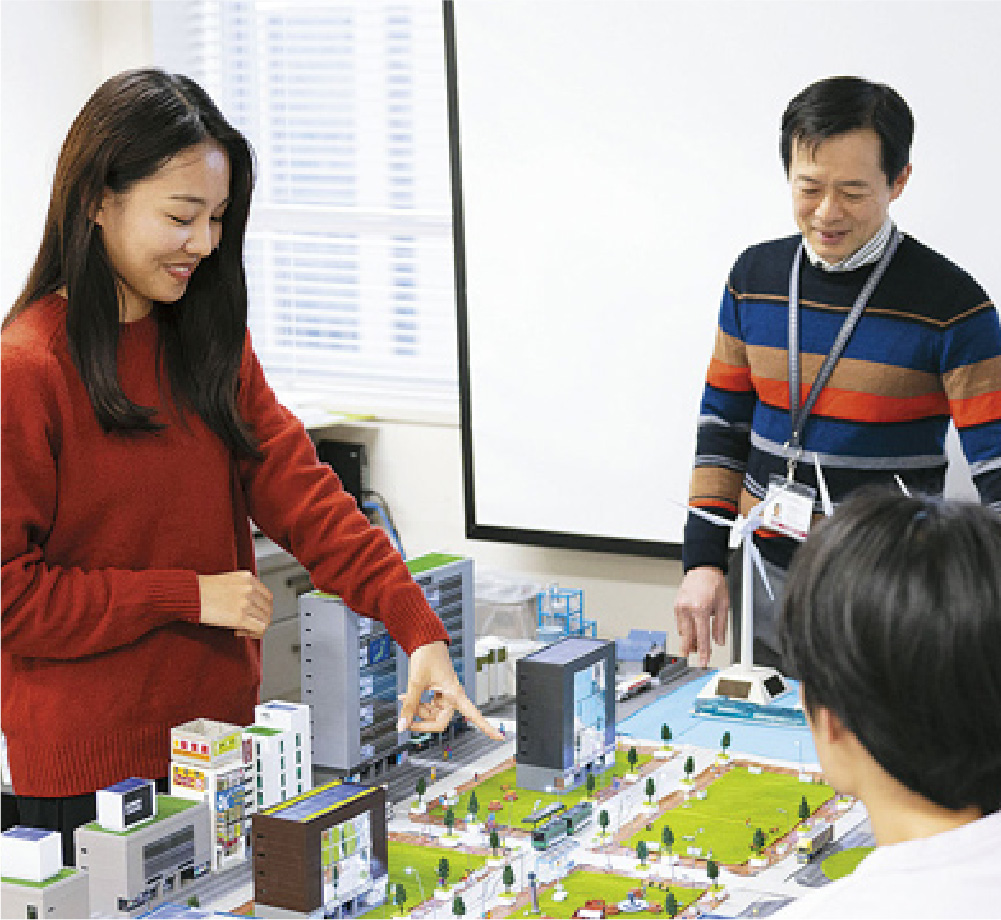
Seminar student voices
Kanna Yamaguchi
Kyushu Sangyo University Kyushu
Industrial High School/Fukuoka

I am conducting research on the concept of a sustainable smart city, and based on my research findings on environmentally friendly renewable energy and new electricity technologies, I am proposing an ideal city for the future.
Qualifications and career path data
Qualifications to aim for
- Junior High School Teacher's License (Technology) <Application Pending> *1
- High School Teacher's License (Industrial Arts)
- Chief Telecommunications Engineer (Partial exemption from examination subjects)
- Electrician (Written exam waived / Class 2) *2
- Chief Electrical Engineer (practical experience required)
- Construction Supervisor (Partial Exemption from Examination Subjects)
- First-Class Land Mobile Radio Operator (Long-Term Training Course), etc.
*1 For programs marked "Application Pending," the start date of the planned teacher training program may change depending on the results of the review by the Ministry of Education, Culture, Sports, Science and Technology. *2 Support for passing the entrance exam is also provided.
Main Employment Destinations
- Kyushu Electric Power Co., Inc.
- NTT West (Nippon Telegraph and Telephone West Corporation)
- Kinden Co., Ltd.
- Kyushu Electric Power Co., Inc.
- / Nishinihon Plant Engineering Co., Ltd.
- NTT Facilities Kyushu Co., Ltd.
- / Miraito One Co., Ltd.
- Nippon Densetsu Kogyo Co., Ltd.
- Hitachi Building Systems Co., Ltd.
- Toshiba Plant Systems Corporation
- Mitsubishi Electric Building Solutions Corporation
- /Kyoritsu Electronics Co., Ltd.
- Panasonic EW Engineering Co., Ltd.
- Nippon Steel Tex Engineering Co., Ltd.
- Mitsui Sumitomo Construction Co., Ltd.
- Sumitomo Electric Industries, Ltd.
- / Secom Co., Ltd.
- Fukuoka City Hall
- / High school teacher in Fukuoka Prefecture
- Japan Semiconductor Co., Ltd.
- / Rohm Apollo Co., Ltd. Kumagai Gumi
Graduate Interview
Yasuki Hatanaka
Izumi High School/Kagoshima
- Employment
- Kyushu Electric Power Co., Inc.
As I learned more about how electricity is generated and delivered to us, my desire to work in the power industry grew stronger. I also met alumni during my job search and received advice, which was very reassuring.
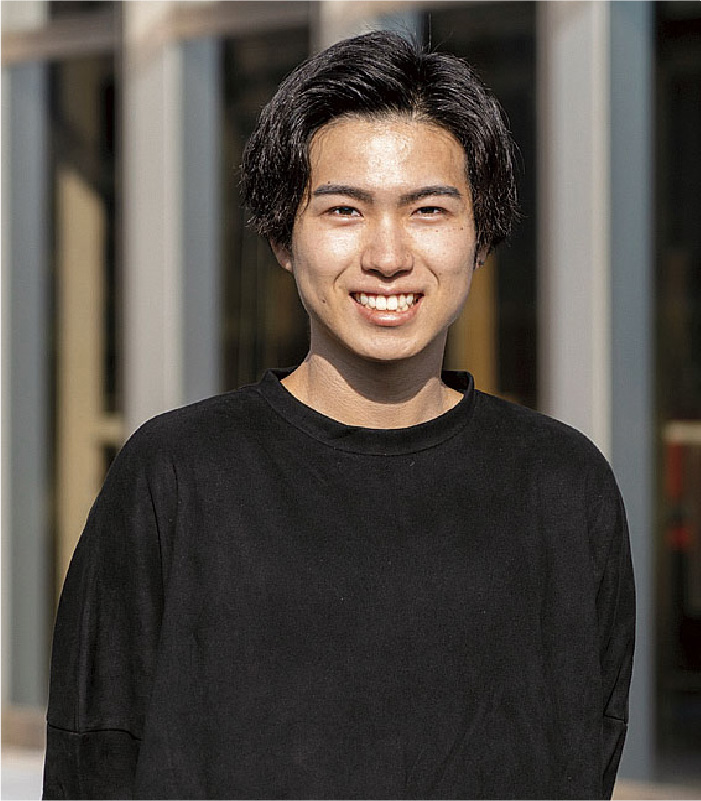
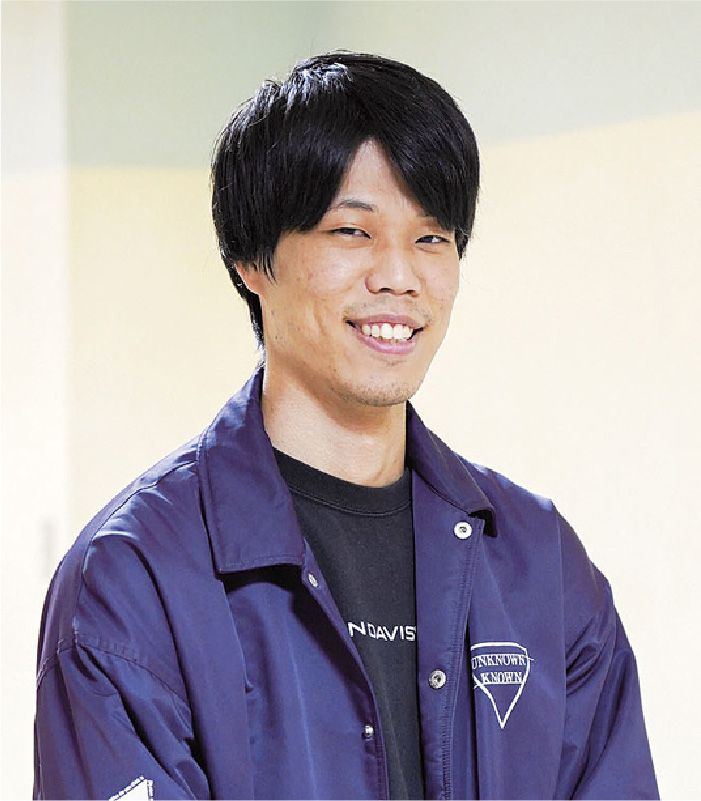
Mr. Masataka Yamazaki
Kyushu Sangyo University Kyushu Sangyo High School/Fukuoka
- Employment
- Kinden Co., Ltd.
At university, I was able to deepen my specialized knowledge through various experiments and research on electricity. I also came to think that I want to use this as my strength in my work. I would like to gain experience as a member of society and grow as a person.

If you cannot view PDF files, please download Adobe Reader.