Third-year students studying the core subject "PBL D" of Global Food Business Program (GFBP) carried out a project to identify and analyze issues at the university's student cafeteria and work to improve them.
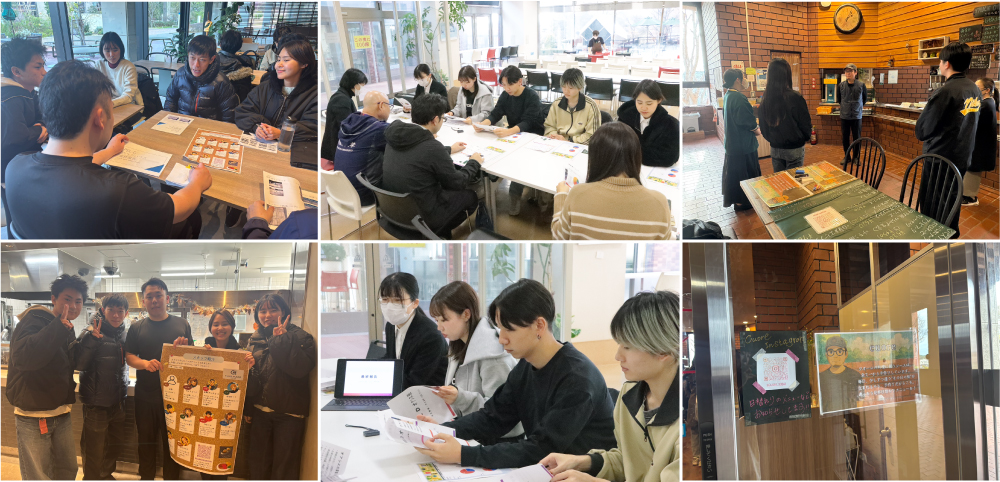
First, the students conducted a literature review on the issues facing university cafeterias due to recent changes in social conditions, then split into three groups and conducted interviews at three of the university's cafeterias: Oasis, Clubhouse, and Cuore. Each group then made proposals for resolving these issues.
The "Oasis" team received requests from the cafeteria, such as "We want to know about cafeterias at other universities," "We want to come up with events that will make students want to come to cafeterias," and "We want to hear students' opinions," and in addition to visiting cafeterias at other universities and devising events, they also conducted a questionnaire survey of Oasis users. After an interim presentation in which they proposed events such as events where winning meal tickets would be given out at random to the cafeteria, the team made their final report on Monday, December 22nd. The students introduced the initiatives of other university cafeterias, such as displaying seasonal menus and nutritional information. They also reported the results of the student survey.
In response to requests from the cafeteria, such as "We want to let people know that we're open until the evening" and "We want to know where our students are from," the "Clubhouse" team distributed sweets and papers with opening hours to customers around Halloween. They also placed a map of Japan at the entrance and conducted a survey in which students were asked to put a sticker with the prefecture they're from. They also created a poster featuring portraits and nicknames of the cafeteria staff, making it easier for students to talk to them.
Through interviews with the cafeteria staff, the Cuore team wanted to let people know about the attention to detail in the sauces they use in their dishes, and created a poster to promote their homemade sauces. Furthermore, because the cafeteria can have long lines that sometimes extend outside the store, they created a chalkboard menu so that customers could check the menu while waiting in line.
Enozono Rika (Chikushidai High School), who was in charge of Cuore, reflected, "When creating the poster, we were conscious of how to express our commitment to our sauces through words and design so that the recipient would understand, and we made the sentences short so that they would be easy to read. We created the menu with the idea that customers would be able to take their time choosing their dishes while waiting in line, making it easier for them to try something different from the usual menu. I also observed the interviews and presentations from all the cafeterias, and each group had different concerns, and the proposals from the other groups were very interesting. It was a valuable experience, as I was able to find out how the cafeterias feel about their students. I believe that the experience of this lecture will be something that I can use in my future studies and in my future."
[Global Food Business Program]