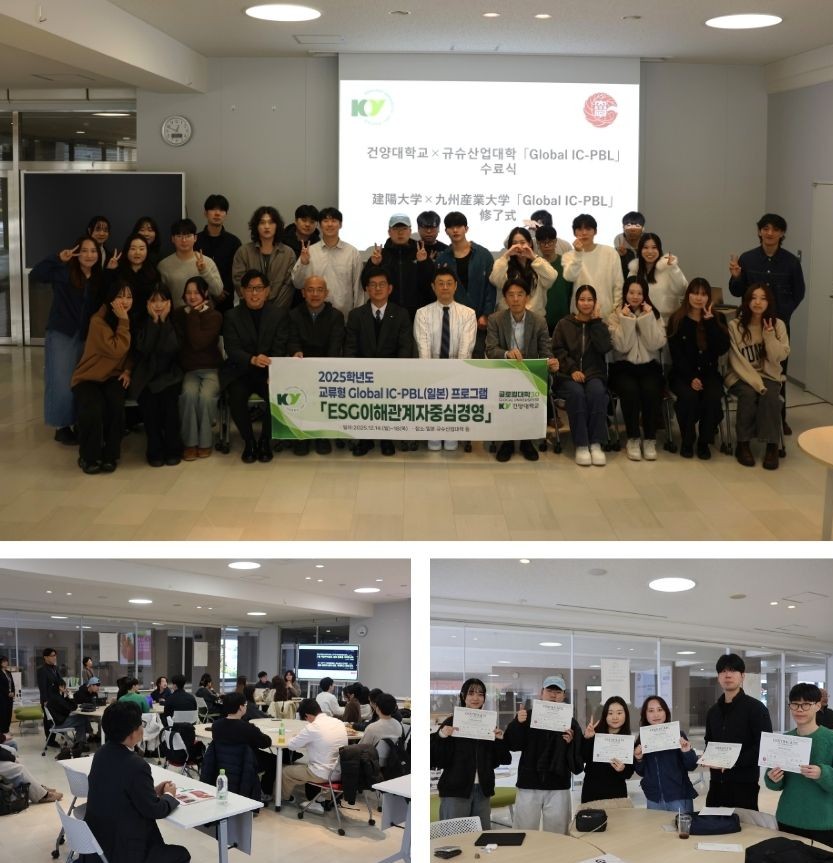
From December 14th (Sun) to 17th (Wed), 12 students from the Department of Department of Tourism of Faculty of Collaborative Regional Development, and Global Food Business Program (GFBP) participated in an exchange program with 16 students from the College of Business Administration, Konyang University (South Korea).
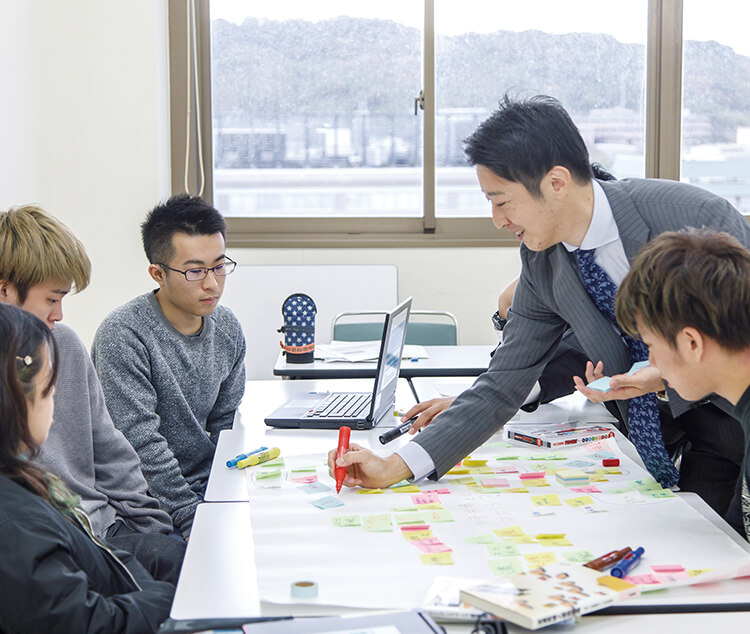
This program is based on the university exchange agreement concluded with the university in July 2025. On the day of the program, participating students were divided into four mixed Japanese and Korean teams, and conducted fieldwork and presentations in both Japanese and Korean on themes they had devised themselves that represented common challenges for Japan and Korea in regional and tourism promotion.
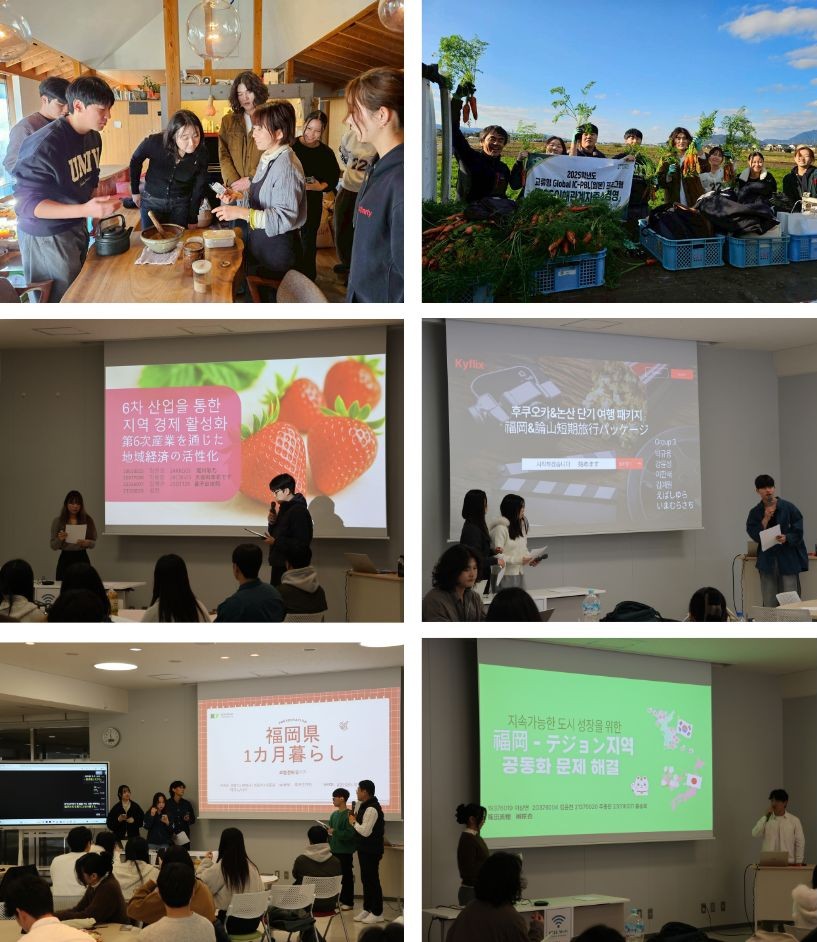
At the presentation, each student came up with ideas for each issue after visiting a farm in Chikuzen Town under the theme of "Regional revitalization through the sixth industry" and inspecting a hotel in Fukuoka City with the aim of developing a "Fukuoka stay program." There were various proposals from the perspectives of students from both countries, and the presentation was met with applause from start to finish.
Oshio Ririka, a second-year GFBP student (Faculty of Faculty of Commerce, Department of Business and Marketing) who visited Chikuzen Town, commented, "At Mugiwara Farm (Chikuzen Town, Fukuoka Prefecture), I experienced harvesting carrots and washing them in a washer. I also made Shiraae (sweet sauce) using the harvested carrots and enjoyed chirashi sushi and clear soup prepared by the farmers. The report on 'Regional Revitalization through the Sixth Industry'was presented in a format where the presentation was alternately given in Japanese and Korean, so I was conscious of keeping a constant grasp of the situation given the language differences. There were times when I had to stop, but I remained calm and checked the content, concentrating on communicating accurately in my own words until the end. Through this program, I keenly felt that when there are language differences, it is essential to share information more accurately. The importance of a common understanding is the same even between Japanese people, but the process of seeking this with a language barrier was difficult but very enjoyable. It was an exchange that taught me many things that can only be learned on the spot, including the problems I encountered."
Ayano Kasahara, a third-year student Department of Tourism the Faculty Faculty of Collaborative Regional Development who conducted fieldwork in Fukuoka city and its suburbs, reflected on the program, saying, "At the Kyushu Tourism Organization, we heard about tourism in Fukuoka and experienced the unique culture and food of Fukuoka, such as visiting Kushida Shrine, trying matcha tea, and going to a Japanese izakaya. In my report, the theme was 'One-Month Stay in Fukuoka Program,' and I wanted the participants to visit not only tourist spots but also places that people living in Fukuoka use on a daily basis, so I made sure to present the information as specifically as possible. Although it was a short period of three days, I was conversing almost entirely in Korean all day, so I was very happy that I naturally gained more vocabulary. The Konyang University students were also good at creating PowerPoint presentations, and I definitely wanted to imitate their composition and presentation. Even during their presentations, I was impressed by how they didn't just look at the presentations, but looked at their listeners while they spoke, which I learned a lot from."
After the presentation, all participating students were presented with a certificate of completion by Dean Suematsu of Faculty of Collaborative Regional Development, concluding the program.
[Faculty of Collaborative Regional Development / Global Food Business Program / Center for International Affairs]